
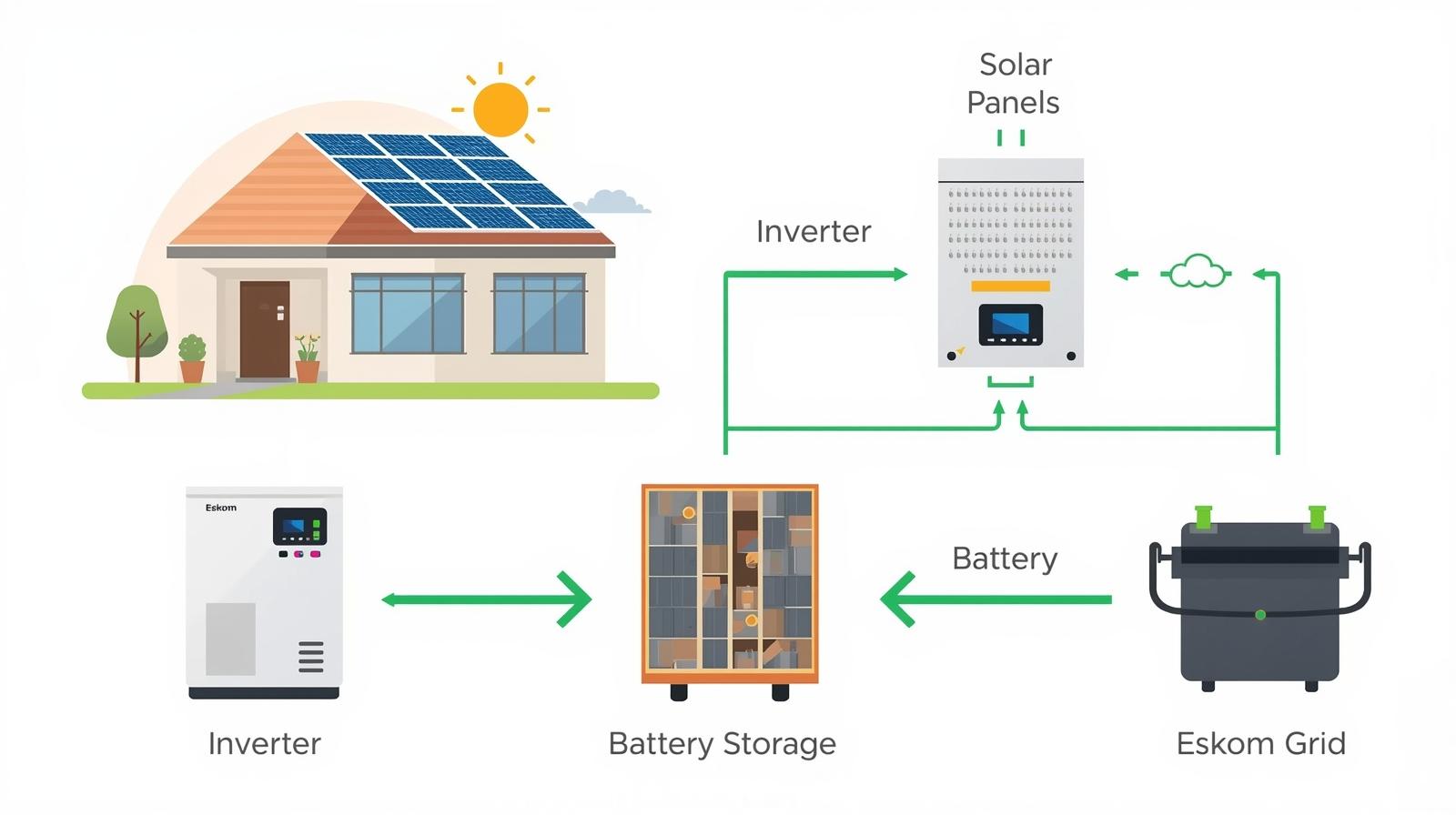
 Solar Panels – Flat panels mounted on your roof absorb sunlight.
 Inverter – Converts DC power from panels into AC power for your home.
 Battery Storage (optional) – Keeps your lights, WiFi, and appliances running during load-shedding.
 Monitoring System – Track energy generation and usage in real time.
 Generate your own clean electricity.
 Cut your monthly Eskom bills by up to 80%. Store power for load-shedding with battery integration.
 Reduce your carbon footprint and support a greener future.
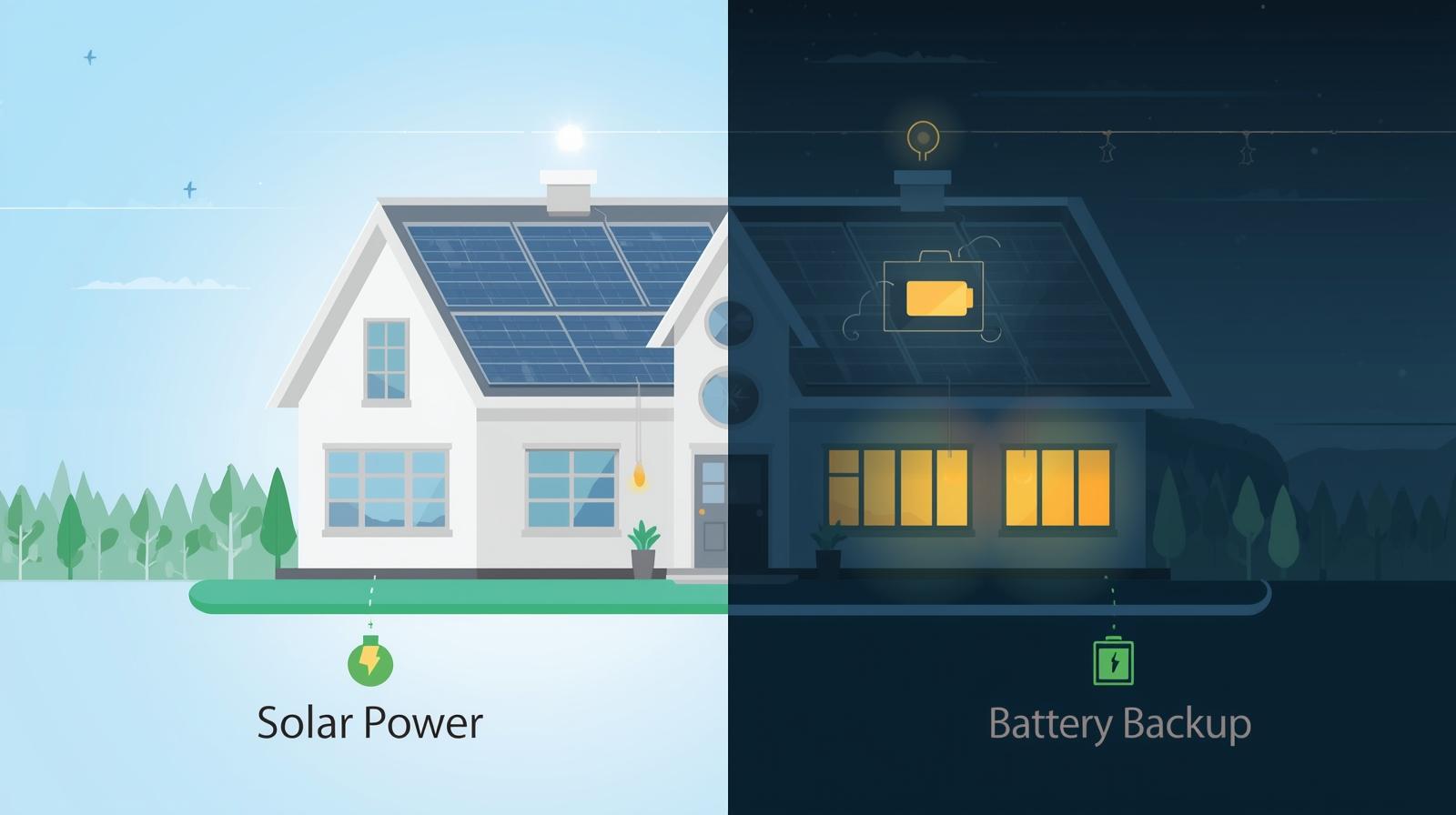
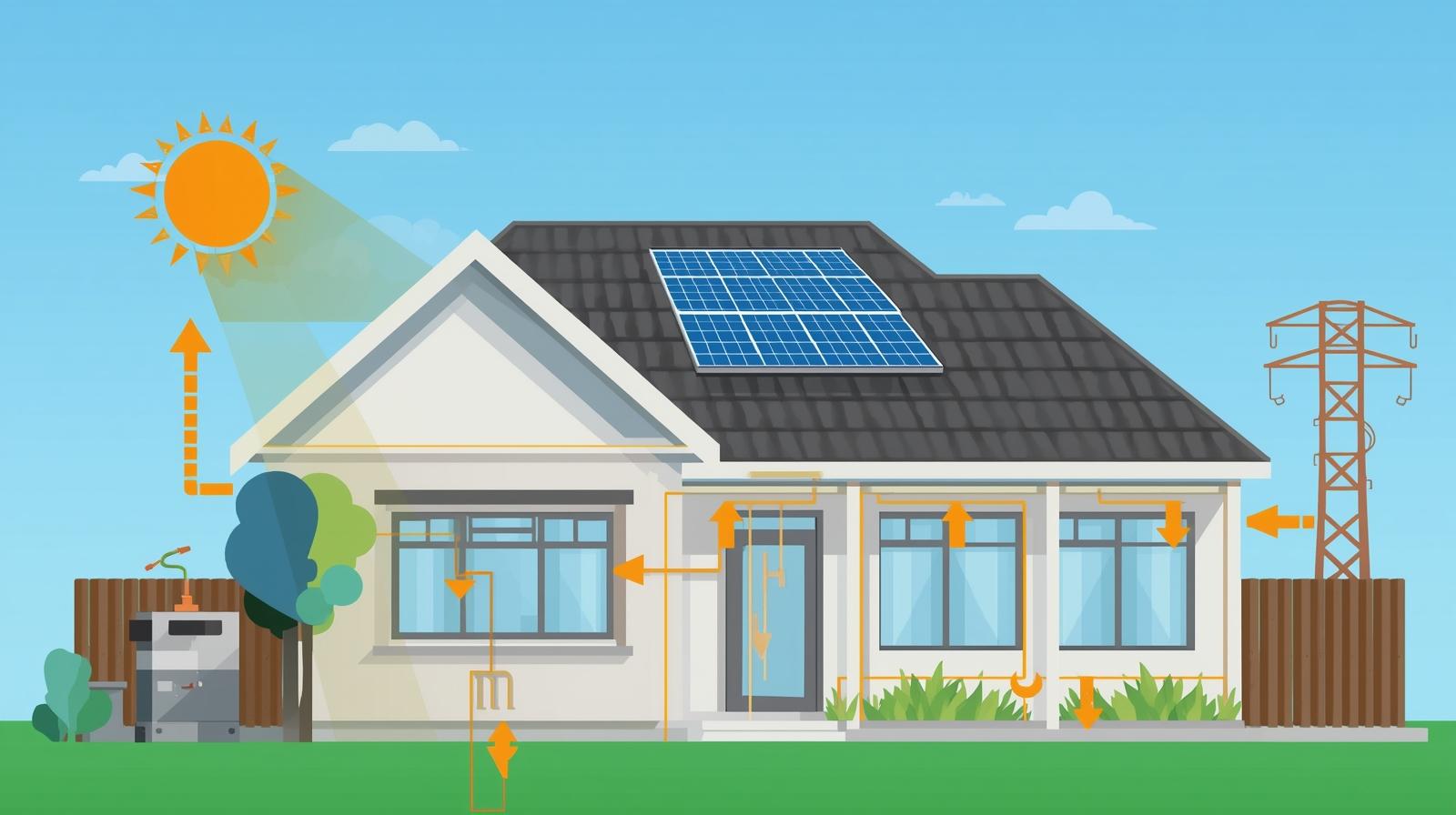
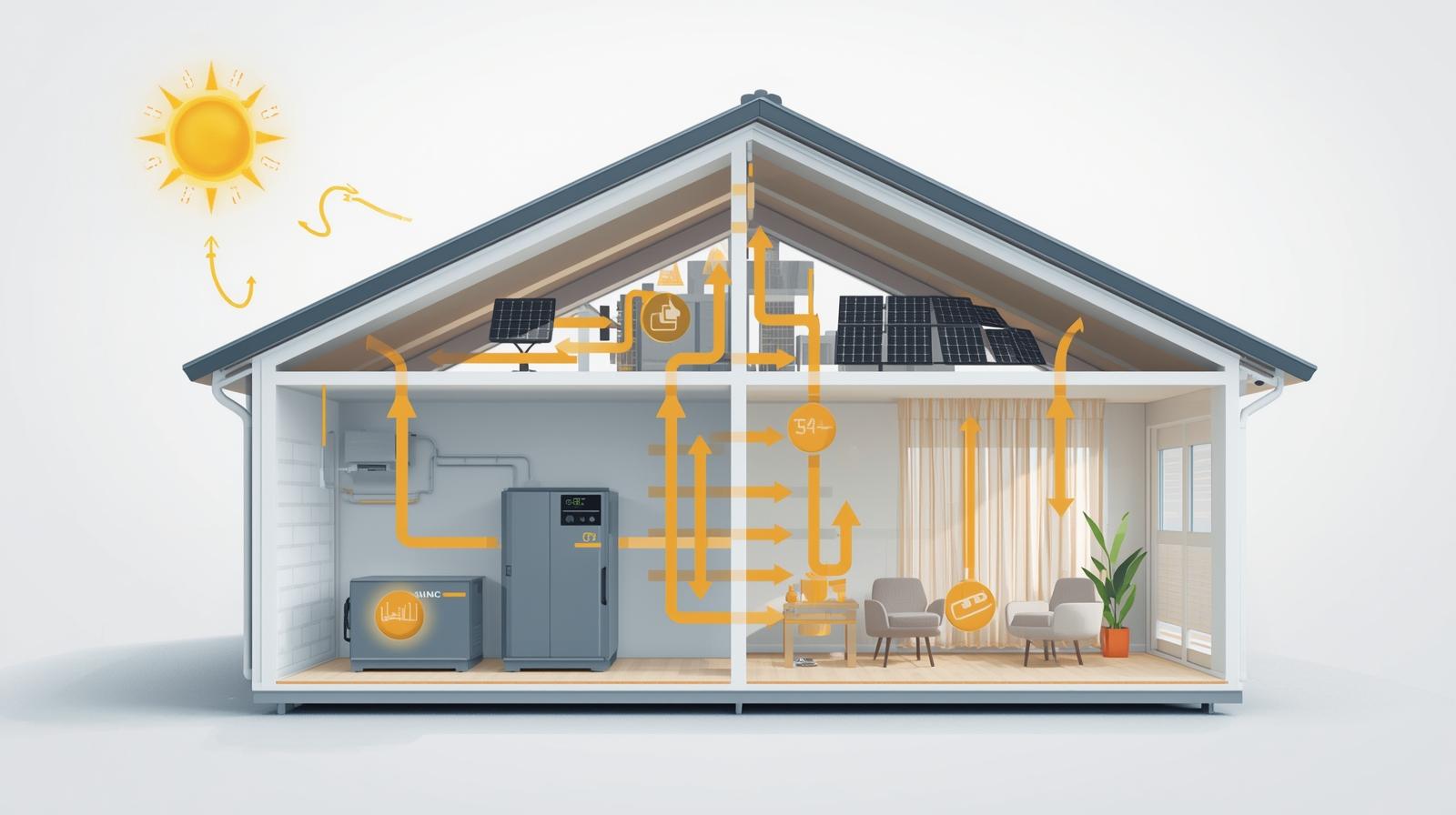

 Save Money – Electricity costs rise yearly. Lock in lower rates now. Beat Load-Shedding – Keep essentials running even during blackouts. Increase Property Value – Homes with solar sell faster and at higher prices. Eco-Friendly – Cut carbon emissions and rely on renewable energy. Long-Term Investment – Panels last 20–25 years with minimal maintenance.
 Expert Installation – Our certified installers ensure safe, high-quality systems.
 Custom Design – Tailored to your household’s energy usage and budget.
 Compliance & CoC – All systems installed with the required certificates of compliance.
 After-Sales Support – We provide maintenance and monitoring for peace of mind.
Putting your geyser onto solar will save you 23% without insulation. Add 9% with insulation. This is your best-bang-for-buck solution. Adding a full PV solution will save you another 30 - 50%.
.
Yes — to guarantee power during grid outages you need storage (batteries) or a generator.
Solar panels convert sunlight into DC electricity using photovoltaic cells. An inverter converts DC → AC for your home. Panels produce most at midday but generate in diffuse light too.
Typical installed system costs vary widely by system size and equipment quality. Residential systems often range from tens of thousands to over R100k — Exact quotes depend on kW size, inverter & battery choice, and installation complexity.
Typical residential payback in South Africa is often around 5–7 years, but can be shorter or longer depending on electricity tariffs, system cost, how much of your solar you self-consume, and whether you add batteries. Use local tariff rates and realistic production estimates to calculate payback.
Very little — mainly keep modules reasonably clean and check mounts and wiring. Typical advice: inspect panels annually and clean 1–2× per year (frequency depends on dust/pollen/bird droppings). Inverter maintenance and monitoring are important too.
Yes — grid-tied systems are regulated as Small-Scale Embedded Generation (SSEG). Homeowners generally must register/apply with their local municipality or Eskom (SSEG application / registration platforms exist). Failure to register can cause compliance issues. Check your municipal SSEG process (City Power, Eskom have requirements).
Yes — panels still produce in diffuse/overcast conditions (less output), and seasonal variation affects energy yield. Design systems with realistic local solar irradiance (peak sun hours) and expected seasonal output.
Typical warranties: product/manufacturer warranty (materials, defects) and performance warranty (power output, e.g. 80–90% output at 25 years). Also check inverter warranty (often 5–10 years, extendable). Verify who services warranty claims locally.
Look for: local experience, references, quote with itemised components , site visit, local registration (SSEG support), written performance estimates (kWh), warranties (equipment + workmanship), and third-party certification where applicable. Get multiple quotes and check reviews.
South Africa’s export / feed-in rules vary by municipality and distributor. Some areas allow export with commercial arrangements; talk to your municipality/Eskom about SSEG rules and export tariffs. Don’t assume you’ll get retail credit for exports—check local policy.
Some municipalities require building plan or electrical compliance certificates, and registration of the system (SSEG). You may need a Certificate of Compliance (CoC) or engineer sign-off for insurance and property transfer. Always confirm local requirements before installation.
If installed correctly by experienced installers (rails, anchors, flashing, waterproofing), properly installed panels do not damage the roof. Insist on good workmanship, leak-proof mounting systems and a workmanship warranty.
Sizing is based on your average daily kWh consumption, roof space and budget. A simple approach: multiply daily kWh need by 1.2–1.4 to allow for system losses, then divide by local average daily peak sun hours. An installer will produce a proposal and production estimate.
Modern systems have multiple safety features (islanding protection, rapid shutdown, earthing, correct cabling). Use certified components and accredited installers; ensure the system is registered and inspected if required by your municipality.
Use your location’s average solar irradiance (peak sun hours) × system kW × system efficiency loss factor (~0.75-0.85) to estimate annual production. Installers can provide production modelling for your specific roof orientation, tilt and shading for a fee.